That is not a dismissal — it is a reality of first nights.
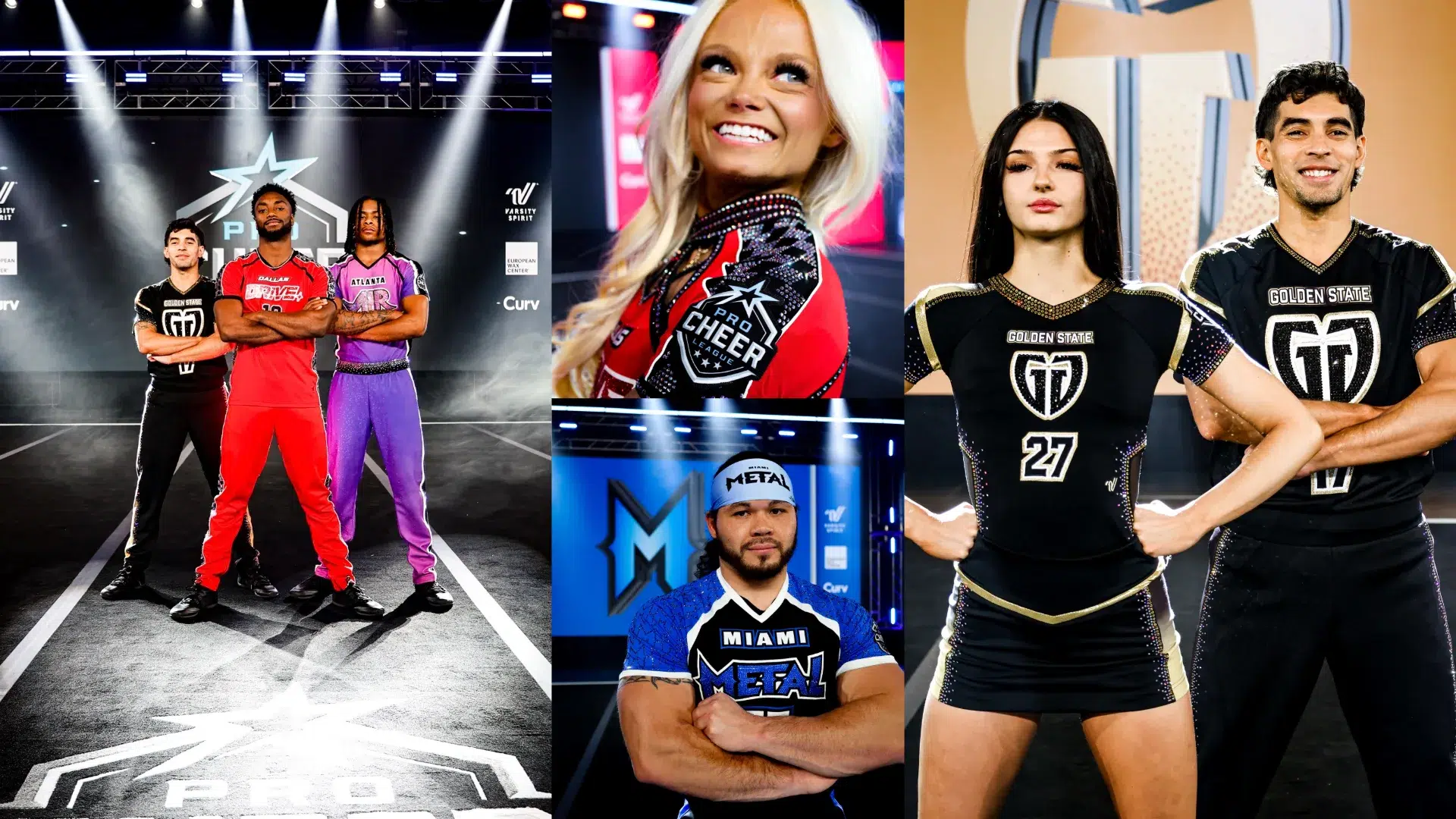
This was the first time cheer has been packaged as a true professional league, produced for television and aimed at a broad audience far beyond the insular world of cheerleading’s all-star gyms, college programs, high school teams, and competition arenas. That alone matters. Cheer has long deserved a stage this large.
But visibility is not the same as clarity, and entertainment is not the same as storytelling.
From the start, the broadcast leaned heavily into “wow moments.” High-level skills appeared early and often, framed as evidence that this was something new, elevated, and distinct. The problem is that without context, spectacle loses its meaning.
Viewers were repeatedly told that certain elements were “pro-level only.” What they were not consistently told was why. How does professional cheer differ structurally from all-star or college cheer? How do these athletes train? How were teams built? What makes this format unique beyond the fact that it is televised?
For a league trying to introduce itself to the mainstream, those explanations cannot be optional.
That lack of education was further underscored by the fact that, after the broadcast, there was no way for viewers to rewatch the match in full — only a brief recap shared with media. For a brand-new league attempting to build understanding, fandom, and credibility, limiting access to the complete broadcast works against its own goals. A full replay would not just serve existing fans; it would function as an educational resource for anyone trying to make sense of what professional cheer is and how it works — particularly given the league’s distribution partnership with Paramount, which would seem to make streaming access both feasible and logical.
Equally missing was something just as essential: storytelling about the teams themselves.
We saw athletes execute skills, but we did not truly meet them as people or understand what their teams represented. Who are these rosters? Where did they come from? What binds them together? What is at stake for them beyond winning?
Instead, the production often centered on individual star power rather than collective identity — a framing that risks reducing professional cheer to personality rather than sport. This is not, and should not be, the Gabi Butler show or any single athlete’s spotlight. A league rises or falls on whether audiences care about teams.
Adding to that tension, the overall presentation at times felt less like a sporting event and more like a television game show — segmented, fast-paced, and designed around instant spectacle rather than sustained competition or narrative.
A more effective structure would have been to build connection first and climax with spectacle later: introduce the teams, explain the format, establish rivalries, then let the biggest skills land as emotional payoffs rather than immediate fireworks and cap the ending of the show with the performances of the routines we’ve been waiting months to see.
The distinction between all-star cheer and professional cheer also remains underexplained.
All-star cheer is a youth and amateur system rooted in gyms, seasons, and progression through levels. The Pro Cheer League is something fundamentally different: a professional, entertainment-driven competition featuring adult athletes performing in a made-for-broadcast environment. That difference should have been central to the narrative, not assumed.
Despite these shortcomings, the concept still holds real promise.
A professional tier could create a healthier ecosystem for the sport — one where older, experienced athletes become the public face of cheer rather than teenagers or college students carrying outsized scrutiny in the social media era. Many young athletes have navigated attention, criticism, and responsibility that far exceeded what amateurs should have to manage. A professional league has the potential to recalibrate that dynamic.
But potential requires refinement.
If the Pro Cheer League wants to grow beyond its existing fan base, it must better educate viewers about what they are watching and why it matters, while also doing more to humanize its teams so audiences connect with the people and stories behind the skills — not just the stunts and skills themselves.
Friday was not flawless. There is plenty of room for improvement. That is not a verdict — it is an invitation.
The league proved it can deliver athleticism. The next challenge is proving it can deliver understanding.
Only then will this truly feel like the beginning of something enduring.
The Pro Cheer League’s second match is scheduled for February 13 in Atlanta. The season will conclude with the championship event in Nashville on March 27. All matches will air live on ION.
Cheer Daily will continue to cover the Pro Cheer League as it evolves — follow us for the latest news and analysis.