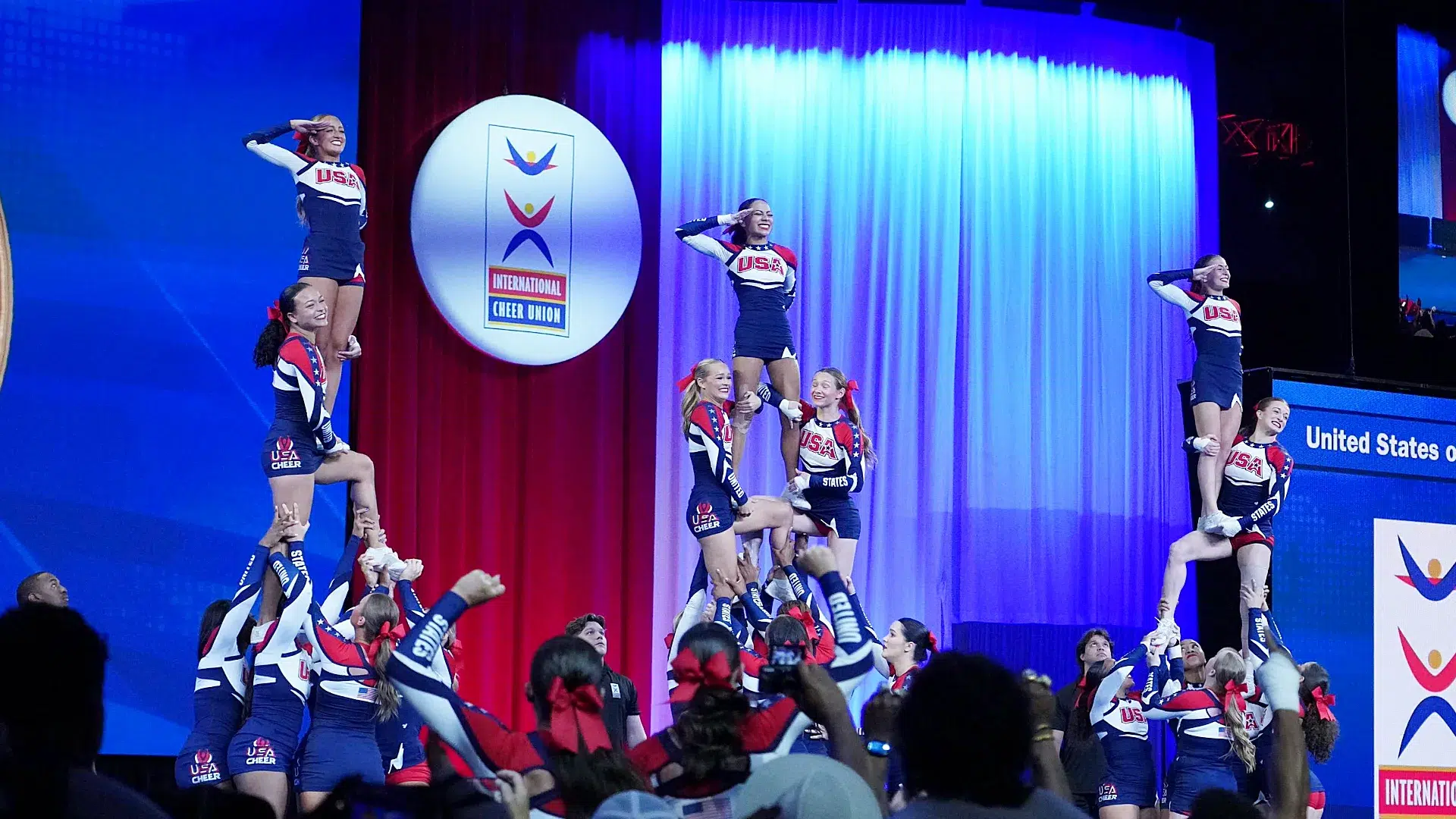
Cheerleading now ranks among the lowest-risk high school sports in the United States, according to new data released by the National Federation of High Schools (NFHS) and the National Center for Catastrophic Sport Injury Research (NCCSIR).
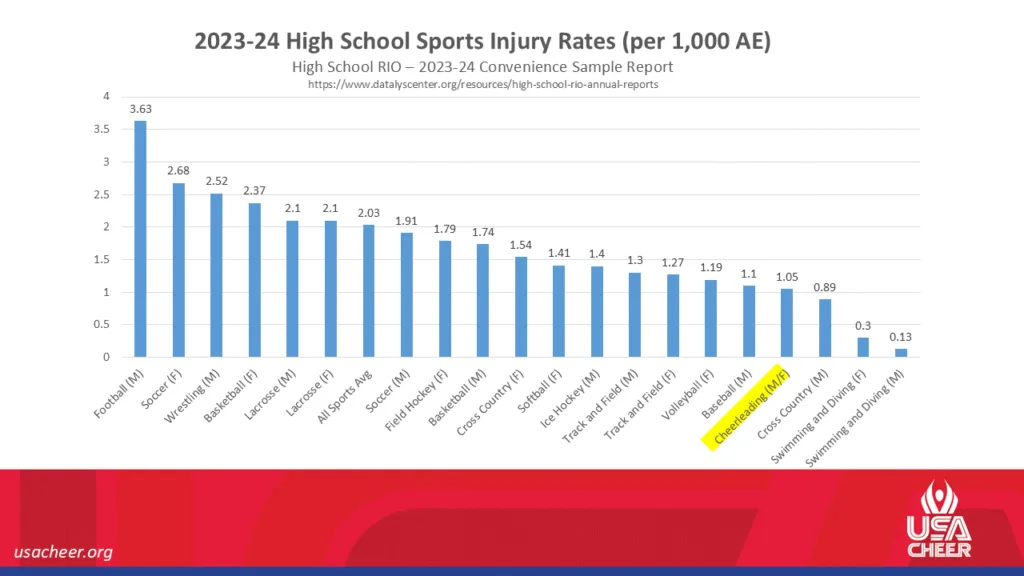
The 2023–2024 High School RIO™ injury surveillance study, conducted by certified athletic trainers nationwide, found cheerleading ranked 17th out of 20 sports in overall injury rate. Cheer reported 1.05 injuries per 1,000 athletic exposures (AE), compared to an average of 2.03 per 1,000 AE across all sports surveyed.
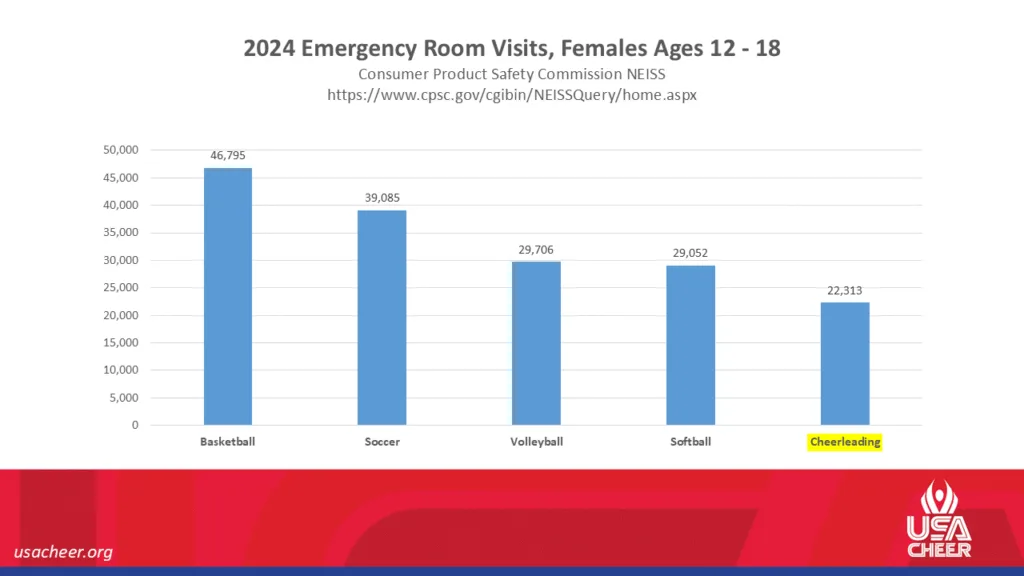
Emergency department data supports the trend. According to the National Electronic Injury Surveillance System (NEISS), cheerleading resulted in 7,457 ER visits annually for athletes aged 14–18—fewer than girls’ basketball (27,097), soccer (16,159), volleyball (11,248), and softball (11,176).
Catastrophic injuries also declined sharply. The NCCSIR reports a drop from 42 cases between 2003–2014 to just six between 2014–2023—an 85% decrease. No fatal or permanently disabling injuries were reported in the sport during the last two years.
The improvement is attributed to a combination of rule changes, coach certification requirements, and injury reporting systems. The 2006–2007 ban on performing basket tosses on hard surfaces led to a fourfold reduction in injuries from that skill, according to a study by Yau, Dennis, Boden, Cantu, and Lord.
USA Cheer requires safety certification for coaches at many events and tracks concussion and injury patterns via its Safety Council. While overall injury rates are low, recent RIO data shows a slight increase in reported concussions, primarily during practice.
A study by Lincoln et al. found cheerleading had one of the lowest concussion rates in high school sports at 0.06 per 1,000 AE, tied with baseball. A separate study by Schulz et al. in North Carolina supported that finding.
Jim Lord, Director of Education and Programs at USA Cheer, said continued monitoring is a priority.
“There is no specific rule change behind the concussion increase,” Lord said. “We’re reviewing the data and emphasizing fatigue management and skill progression in practices.”
The NEISS, NCCSIR, and High School RIO data collectively support the conclusion that cheerleading has seen significant improvements in safety outcomes over the last decade.
For complete safety reports, rules updates, and injury data, visit cheerdaily.net.
Sources:
1. High School RIO™ – https://www.datalyscenter.org/wp-content/uploads/2025/07/2023-24-High-School-RIO-CONVENIENCE-Summary-Report.pdf
2. NCCSIR Annual Report – https://nccsir.unc.edu/reports/
3. Xu AL, Suresh KV, Lee RJ. Progress in Cheerleading Safety: Update on the Epidemiology of Cheerleading Injuries Presenting to US Emergency Departments, 2010-2019. Orthop J Sports Med. 2021 Oct 13;9(10):23259671211038895. doi: 10.1177/23259671211038895. PMID: 34676270; PMCID: PMC8524718.
4. NEISS Injury Data – https://www.cpsc.gov/Research–Statistics/NEISS-Injury-Data
5. USA Cheer Safety Resources – https://www.usacheer.org/safety/research