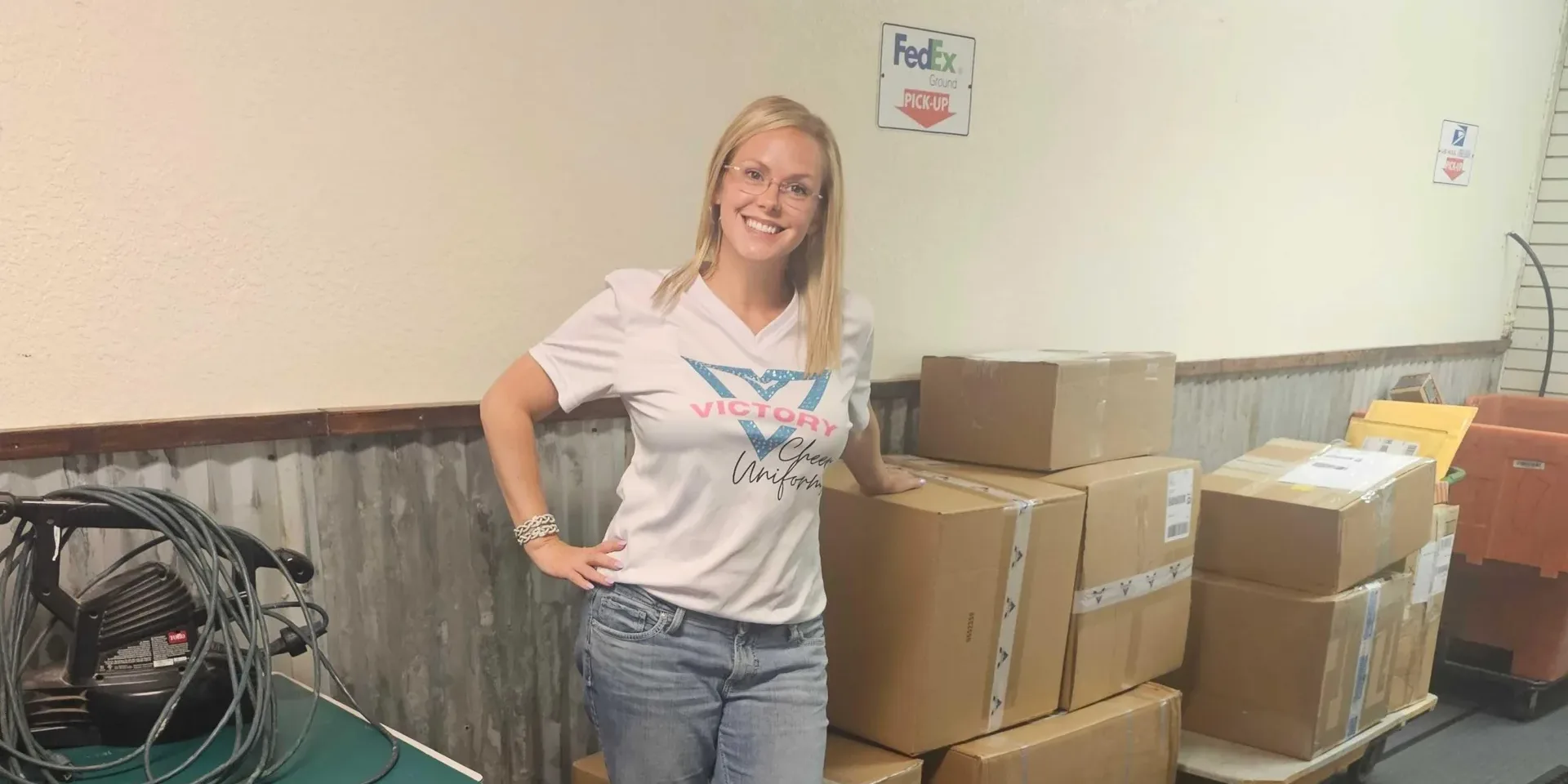


In 2006, a professor handed out a routine assignment to a classroom of college students: build a website about something personal. Most chose straightforward topics. Laura Estle-Jewell, then just beginning to carve out her path, decided differently. She knew immediately what her subject would be.
Her older cousin, a cheerleader, had made a lasting impression. It wasn’t just the routines or the sideline energy. It was the sense of belonging, the quiet strength, and the way a cheer uniform seemed to unify people from different backgrounds into something larger. That idea of identity and community stayed with her, and so she built a website dedicated to it. She called it Victory Cheer Uniforms.
At the time, it was simply a class project. She would carry that name, though, through every research paper, case study, and strategy exercise during her undergraduate years. By the time she finished college, the idea had grown into something more than an academic exercise.
From Early Lessons to Lasting Principles
While still studying, Estle-Jewell took a part-time job with another uniform brand. The role was supposed to be a way to earn extra money while staying close to the sport she loved. Instead, it became her first lesson in what the industry often got wrong.
She expected guidance and structure. Instead, she was handed a binder and told to start visiting gyms. When coaches and parents had questions she couldn’t answer, she sat on hold for long stretches, unable to deliver the clarity clients expected. What should have been a dream opportunity left her frustrated and convinced there had to be a better way.
Those frustrations later shaped the principles of Victory Cheer Uniforms: consistent training, direct access to leadership, and a refusal to leave coaches without answers. What she once viewed as a failed experience became the blueprint for what she would one day build.
The Leap From Project to Company
By 2010, the class project had transformed into a business. Starting with a laptop and a small desk at home, Estle-Jewell tried to manage every detail herself. Orders, design, communication, billing—all of it landed on her shoulders. Her son had just been born, and she often answered emails from the hospital or whispered through phone calls while the baby slept.
There were moments when she wondered if it was sustainable. The workload was endless, and she had no clear plan for scaling. Yet word spread quickly among coaches and parents about her responsiveness and willingness to solve problems. It wasn’t just the uniforms—it was the reliability.
The turning point came when Disney contacted her team with a high-profile request: create custom uniforms for the film Zombies 2. The timeline was tight, but she delivered. The project brought visibility, credibility, and enough capital to hire her first full-time employees.

Building a Team With Staying Power
Estle-Jewell made a deliberate choice about how to grow: not with freelancers or temporary staff, but with people who would become integral to the company. Her first hires—Michelle, Carmen, Faindy, and Vanessa—remain part of the organization today. Their stories mirror the culture Estle-Jewell wanted to cultivate.
Carmen, originally unsure of her skills as a graphic artist, was encouraged to develop her craft and now mentors new designers. Faindy began in account management and, through encouragement to follow her interests, shifted into marketing, where she now helps shape brand strategy. Vanessa, a former cheerleader, left briefly to explore her own entrepreneurial ideas but returned, drawn back by the mission and the people. Nica joined in 2023 and quickly advanced into a supervisory role, bringing structure to the company’s growing operations.
It is not uncommon in retail and apparel for employees to cycle in and out, but Victory has built a team that chooses to stay. For Estle-Jewell, the retention is proof that culture and accountability matter as much as product.
A Distinct Approach to Design
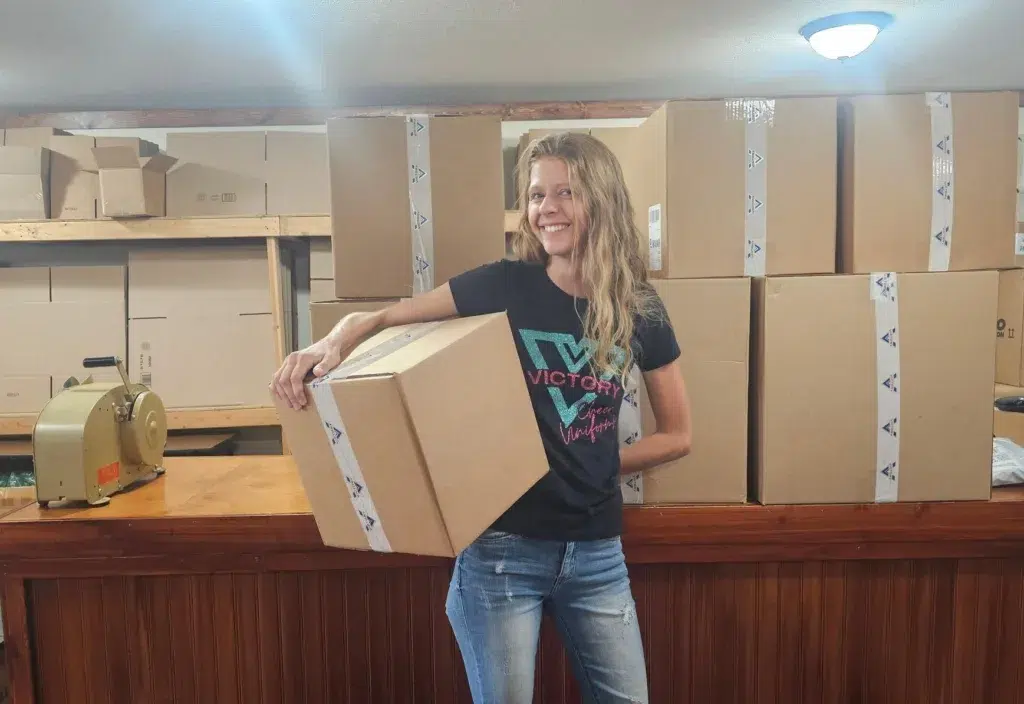
One of Victory’s most recognizable innovations is its live design process. Instead of passing ideas back and forth by email, the company’s designers schedule real-time sessions with coaches. Using screen sharing, they make adjustments on the spot: colors change, logos shift, pleats are added or removed. What can take weeks elsewhere is finalized in under an hour.
For coaches, the system offers control and efficiency during a busy season. For designers, it is an opportunity to collaborate creatively. “You’re not just adjusting files,” says Carmen. “You’re building something with the client sitting right there.”